First Star Impact Reports
Children in care often experience disrupted schooling, placement moves and the impact of trauma. They are less likely to achieve strong GCSEs and to progress to higher education compared with their peers. Transition points such as GCSEs, post‑16 and leaving care can be cliff edges without stable adult scaffolding.
Carers and educators want to help but need time, tools and trusted pathways. First Star’s response is a long‑term, relationship‑centred programme that builds belonging, skills, aspirations and practical access to higher education.
have enjoyed being part of the programmes and activities
have felt very supported and safe during activities and sessions
feel their voice and ideas have been valued in the programme
would recommend First Star Scholars to someone in a similar situation
have experienced social and emotional growth through the programme
feel confident expressing their thoughts and opinions in group settings
feel connected to other scholars in the programme
feel optimistic about their future
Breaking the Care Ceiling
Breaking the Care Ceiling is a landmark report commissioned by First Star Scholars UK, exploring the university journeys of care-experienced young people across the UK. It reveals how many care leavers access higher education, what their outcomes look like, and what happens to those who don’t make it to university. The findings offer a powerful call to action for educators, policymakers, and support networks to raise aspirations and remove barriers.
Headline outcomes for 2026 for those taking exams, progressing to University or employment:
- GCSE English & maths 4+ pass rate: 78%
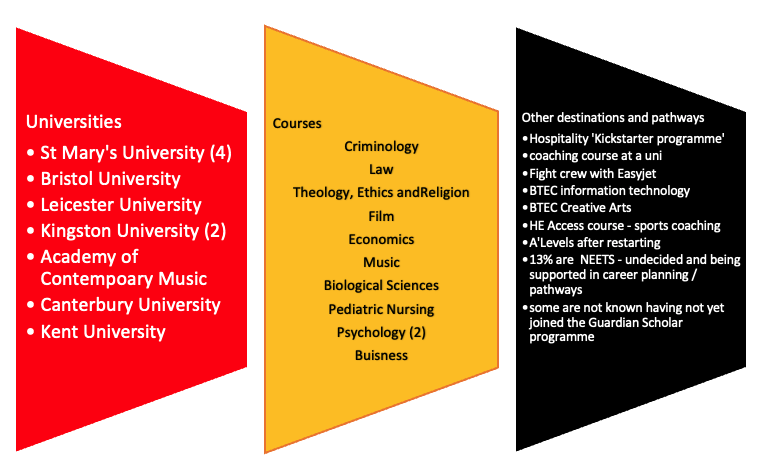
- Progression to higher education: 49%
- Progression to training or employment: 46%
These results sit on top of improved confidence, attendance, study habits and a stronger sense of belonging.
Theory of Change
Our theory of change connects the needs of care-experienced young people with the activities and outcomes of our programme. We create a strong sense of belonging, which builds intrinsic motivation and leads to behavioural alignment with high aspirations. Through consistent support, mentoring, and enriching experiences, young people gain confidence, resilience, and the skills needed to succeed. This results in improved engagement and attainment, with long-term impact seen in higher education access, independence, and breaking cycles of disadvantage.


Where are they now?